 EXREY
Hacksaw Ridge: The True Story of Desmond Doss
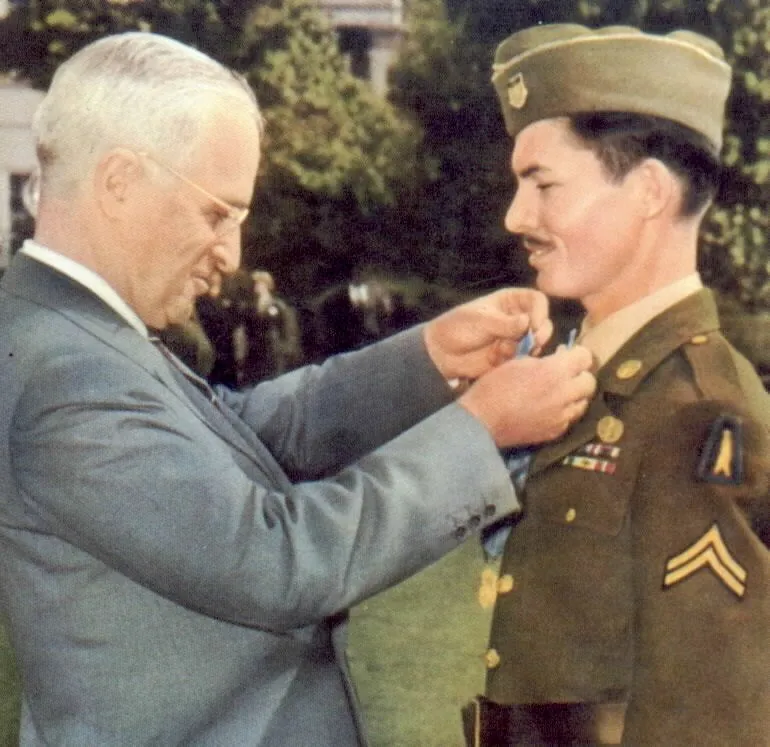
Yes. Hacksaw Ridge (2016, directed by Mel Gibson) tells the true story of Desmond Doss, a US Army medic and Seventh-day Adventist who refused to carry a weapon. During the Battle of Okinawa in 1945 he lowered wounded soldiers one by one down a cliff called Hacksaw Ridge, saving at least 75 men, and received the Medal of Honor from President Truman on 12 October 1945.
Hacksaw Ridge sounds like the least likely war story there is: a soldier who refuses to touch a gun. Desmond Doss was real, and the most unbelievable parts of the film are the ones closest to the truth.
Who was Desmond Doss?
Doss grew up in Lynchburg, Virginia, in a Seventh-day Adventist family. When the United States entered the Second World War he volunteered, but his faith did not allow him to kill or to carry a weapon. He asked to serve as a combat medic.
The Army did not know what to do with him. Fellow soldiers mocked him and officers tried to have him discharged; the film's courtroom scene dramatises that pressure, though Doss was never actually court-martialled. He stayed, unarmed, as a medic with the 77th Infantry Division.
Guam, the Philippines - and the ridge
The film skips a large part of his war. Before Okinawa, Doss served on Guam and in the Philippines, and was awarded two Bronze Star Medals there for treating wounded men under fire.
In May 1945, on Okinawa, his unit attacked the Maeda Escarpment, a steep cliff the soldiers called Hacksaw Ridge. When a counterattack drove the Americans back with heavy losses, Doss stayed on top. For hours he carried wounded men to the edge and lowered them down the cliff with a rope, one at a time, praying "Lord, please help me get one more." His Medal of Honor citation speaks of about 75 men; he believed it was fewer.
Days later he was wounded by a grenade and then by a sniper. He gave up his place on a stretcher to another wounded soldier.
The Medal of Honor
On 12 October 1945 President Harry S. Truman presented Doss with the Medal of Honor at the White House. He is one of very few conscientious objectors ever to receive it.
After the war
Doss's wounds and tuberculosis contracted during the war kept him in hospitals for years, and he lost a lung. He lived quietly in Georgia, refused for decades to let Hollywood tell his story, and died in 2006. The film ends with footage of the real Doss and the men he saved.
Why it matters
Doss did not ask anyone else to share his beliefs, and he did not avoid danger because of them - he went where it was worst, without a weapon. The film's question is the one his comrades eventually answered for themselves: what does courage look like when it refuses to fight?
Questions people ask
Is Hacksaw Ridge based on a true story?
Yes, on Desmond Doss (1919-2006) and his actions at the Maeda Escarpment on Okinawa in May 1945.
How many men did Desmond Doss save?
His Medal of Honor citation speaks of about 75; other estimates go up to 100. Doss himself said it was closer to 50.
Did Desmond Doss win other medals?
Yes. Before Okinawa he received two Bronze Star Medals for his actions on Guam and in the Philippines, and he was wounded several times.
Was Desmond Doss court-martialled?
No. He was pressured and ridiculed for refusing a rifle, and the Army tried to discharge him, but the court-martial in the film is a dramatisation.